Showing posts with label Health News. Show all posts

Wednesday, June 24, 2009

Prices of flu drugs, vaccine triple amid A(H1N1) crisis


Popular anti-viral drug Tamiflu now sells at P150.50 per capsule. - APMANILA, Philippines – Prices of flu drugs and vaccine have surged up to three times their normal prices, aggravating the Philippines’ Influenza A(H1N1) crisis as demand from health-conscious buyers is making the product scarce and increasingly expensive.

The Philippines, which is lagging behind other countries in the race for securing ample supplies of anti-swine flu vaccine, has listed 604 confirmed cases and one A(H1N1)-related fatality so far. It is now under pressure to take decisive steps in reducing mortality related to the novel virus.

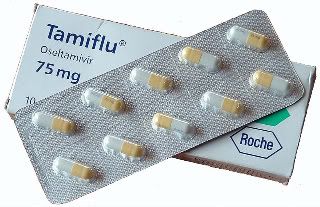
Tamiflu – a popular brand of the anti-viral drug oseltamivir used to treat symptoms of the A(H1N1) virus – now sells at P150.50 per capsule at a popular drugstore.

The Department of Health (DOH) was able to purchase its first batch of 750,000 capsules of Tamiflu at P40 each before the A(H1N1) virus started spreading across the globe, said Dr. Yolanda Oliveros, director of the DOH National Center for Disease Protection and Control. The flu vaccines in the market only protect people from the regular seasonal flu viruses – Dr. Remegio Olveda, director of the Regional Institute for Tropical Medicine

Another batch of 500,000 Tamiflu capsules was sold to the government through bidding at P48 a capsule after the Philippines started reporting A(H1N1) cases in the country, Oliveros said.

Since April, the DOH has distributed 600,000 Tamiflu capsules for free to patients who were infected by the new flu strain. All the medical expenses of A(H1N1) cases – from testing to hospitalization – have been shouldered by the DOH since the virus came out.

A source from the DOH told GMANews.TV that consumers have been calling the agency to inquire about the “high prices" of anti-flu medicine and vaccines.

Dr. Remegio Olveda, director of the Regional Institute for Tropical Medicine, said the flu vaccines in the market only protect people from the regular seasonal flu viruses.

“Pero maganda na rin na protected ka sa seasonal flu para maiwasan na mag-mutate pa ang A(H1N1) virus," said Olveda. He stressed the possibility that the A(H1N1) virus, when introduced to another type of flu virus, could form a new strain.

From P500 to P1,800

FLU SHOT. The flu scare has sent people scrambling for flu shots, which may only provide a false sense of protection from A(H1N1). APThe exorbitant prices imposed by medical practitioners and drug firms may be considered “profiteering," and the government should find a way “to regulate" the prices of the flu products, said the DOH source, who spoke on condition of anonymity.

A health advocacy group has called for the filing of charges against doctors and drug firms suspected of jacking up drug prices for Tamiflu and flu vaccines.

In an interview with GMANews.TV, Health Alliance for Democracy (HEAD) vice chairperson Gene Nisperos said the group has received reports about some doctors charging their patients as high as P1,800 for a flu shot, in addition to their professional fee (PF).

“Nakikinabang ang malalaking companies at sinasamantala nila ang takot ng mga tao [Big companies are benefiting from the scare and are taking advantage of the situation]," he said.

“Baka plus PF ay umabot na ng almost P3,000. Overpricing na iyan," (If the PF is included, the price would reach almost P3,000. That’s overpricing) he said.

A doctor who operates her own clinic in Makati City admitted in an interview with GMANews.TV that she sells anti-flu vaccines – with brand names Agrippal, Fluarix, and Vaxigrip – at P1,000 to P1,500 per dosage.

At a popular retail drug store, GMANews.TV learned that a single dose of flu vaccine is sold at P695. Most doctors recommend one to two doses per person as protection from the seasonal flu virus.

According to Oliveros, the regular price of flu vaccine is only P500. The DOH is not undertaking free vaccination for the public, but has purchased vaccine for their employees, she said.

The DOH had earlier requested P93.5 million from the national government for “anti-A(H1N1) preparation," Oliveros said. The DOH has shelled out P60 million of the funds and intends to use the remaining amount to buy personal protective equipment such as masks.

Responsible pricing Flu vaccine manufacturers and distributors are selling their products to drug retailers at “reasonable" prices, according to Dr. Sally Gatchalian, medical director for vaccines at the GlaxoSmithKline (GSK). The company is a leading flu vaccine distributor in the Philippines, carrying the brand Fluarix.

The Department of Trade and Industry on Wednesday released the suggested retail prices (SRP) for consumer products that have recently been in demand due to the global flu scare.

[SRP Submissions from Medical Center Trading Corp; Green Cross; Pagoda Philippines; Johnson and Johnson Phils., Inc.; Core Brand Chemical, Inc.; Philusa Corporation; Rogenson Company Inc.; Mercury Drug Corp- loose prices; PAGASA member supermarkets - prevailing prices and ~Watson SRPs]

Gatchalian told GMANews.TV that some patients probably get a steep bill for a flu shot because it includes expenses for medical examination, the doctor's professional fee, and other miscellaneous fees.

GSK and other manufacturers of flu vaccines are members of the Pharmaceutical Health Care Association of the Philippines, which said it has no control and influence over the pricing policies of member firms.

Source:
gmanews.tv

Monday, June 22, 2009

1st flu death reported in RP

MANILA, Philippines – The Department of Health (DOH) reported yesterday the country’s first death from Influenza A(H1N1), a 49-year-old mother who was known to have other pre-existing illnesses.

The latest total count of infected cases nationwide soared to 445 after 17 more were recorded yesterday. The good news, however, is that out of the total cases, 374 have fully recovered.

Health Secretary Francisco Duque III said that based on the autopsy report, the viral infection was not the primary cause of the death, but rather “congestive heart failure secondary to acute myocardial infarction aggravated by severe pneumonia – either bacterial, viral or both.”

“This one is a very interesting case. It embodies several high-risk and pre-disposing factors that accelerated the death (of the patient). It is in line with what we have been saying for several weeks, that complicated cases will be encountered,” Duque noted at a press conference.

Aside from congestive heart disease, the patient was found to have tuberculosis, enlarged liver, kidney and spleen, tumor in the uterus and tyromegaly or goiter.

The patient was not even in the DOH’s records of suspected and confirmed A(H1N1) cases and had no history of travel to countries that have the virus.

According to Duque, the patient came home from work with a cough last June 17 and developed fever, cold and chills the following day so she did not report for work.

On June 19, the patient was no longer able to take her breakfast and suddenly experienced difficulty in breathing. She died even before the doctor called by her family arrived.

The next day, the brother notified Duque about the incident and throat swab samples were collected from the patient.

The specimens tested positive for A(H1N1).

“Given the available information, we cannot conclude that the death is due to A(H1N1). But in other countries which have reported A(H1N1) deaths, a majority have pre-existing medical conditions. We condole with the family of the patient as we mourn her untimely death,” Duque, who was a friend of the patient’s brother, said.

He assured the public that the patient no longer poses a threat to those who might attend her wake because the virus dies when the host-body perishes.

The DOH had advised the household contacts of the patients to observe self-quarantine while it is checking with others who could have come in close contact with her.

Duque said the husband had manifested symptoms ahead of the patient but he tested negative for the virus when examined. The patient’s son, mother, sister and brother have not developed flu-like symptoms.

With this development, the health secretary said that the DOH will be “more aggressive in targeting segments of patients with high vulnerability to fatal flu complications and who should be the ones to receive the most care and attention by healthcare professionals.”

Malacañang immediately stepped into the picture and urged the public not to panic.

Deputy presidential spokeswoman Lorelei Fajardo said the victim was considered a “high-risk” case and health authorities still consider her infection as mild.

“I think our DOH officials are on the right track by giving more attention to the high-risk patients,” Fajardo said.

“There’s nothing to be alarmed about. Again we just need to be prepared and that’s what we’re doing right now,” she added.

Scary projection

Although the health department is doing its best to prevent the virus from spreading, one of its officials estimated that around 22.5 million Filipinos may be afflicted with it, considering the way it has been spreading.

Dr. Lyndon Lee Suy, head of the agency’s Emerging and Re-Emerging Infectious Disease Program, told the panel of South Cotabato Rep. Arthur Pingoy that the virus could affect 25 percent of the population estimated to be at least 90 million.

“When you talk about projection, with the 25 percent attack rate, we can say that we are expecting 25 percent of the population to be affected with influenza A(H1N1),” he told Parañaque Rep. Roilo Golez.

Suy, however, did not specify any time frame for the spread of the disease.

Dr. Vito Roque, head of the surveillance unit of the DOH National Epidemiological Center, acknowledged that the current trend of the virus is steadily increasing, as evidenced by the day-to-day monitoring of cases.

Muntinlupa City Rep. Ruffy Biazon said the first casualty of A(H1N1) virus should be thoroughly studied by the health department to determine if a new strain had indeed claimed the life of the victim.

“The first A(H1N1) death in the country should be fully investigated by the DOH in order to determine if it was caused by a new strain of the virus or if the victim simply had a weaker physical condition,” he said.

“The first few hundred cases were considered mild. But this death might be the start of the stronger cases, hence the DOH should take extra effort in containing the virus,” added Biazon.

During the initial stage of the briefing, Golez showed disappointment over the absence of Duque and warned the representatives of DOH about its logistical capability.

“I know that Secretary Duque is busy, but this is a very important matter. I am going to ask the policies and budgetary concerns of the agency.”

But Suy defended his boss’ absence. “The secretary is currently attending an emergency meeting regarding H1N1.”

Still wreaking havoc

But while the bureaucracy is neck-deep in its efforts to control the spread of the virus, several other cases have been recorded all over the country, prompting schools to suspend classes.

In Metro Manila, St. Scholastica’s College in Manila and St. Paul College-Makati had suspended classes for 10 days starting yesterday due to A(H1N1). Classes for pre-school, elementary and high school students will resume at both schools on July 1 when school facilities have already been subjected to disinfection.

Reedley International School in Libis, Quezon City and Rosary Hills International School in Kaybiga in Caloocan City also suspended classes yesterday.

Dr. Teresita Domalanta, of the Department of Education National Capital Region, said classes were also suspended in La Salle Greenhills, San Juan; Don Bosco Technical Institute, the St. Bernadette School and the Southridge-PAREF School in Mandaluyong City.

Adamson University-Manila suspended classes at all levels but only for five days with one confirmed case of A(H1N1). Classes will resume on June 25.

The University of Santo Tomas in España, Manila had suspended classes for a number of courses housed in its St. Martin de Porres Building.

Among the UST colleges that had suspended their classes for 10 days are the Colleges of Nursing, Medicine and Rehabilitation Sciences.

University of Cebu in Mandaue City had three confirmed cases that resulted in some 600 nautical course students being quarantined.

Two cases were reported at Karangalan Elementary School in Cainta, Rizal while 11 persons, including nine students, were reportedly infected in Sta. Rosa, Laguna, leading to the suspension of classes in at least six schools.

Six of the infected students were from Sta. Rosa Central School and three from Canossa Academy School.

Nazareno said the patients are now being treated and are responding well to medication.

Classes were also suspended at the Sacred Heart College in Tacloban City after a Grade IV pupil was monitored with the viral infection.

City health officer Dr. Jaime Opinion reported that it is monitoring 163 individuals who were exposed to persons confirmed with the virus.

Two of the three cases in Eastern Visayas are residents of Tacloban. The other, a 44-year-old seaman, is from Catbalogan, Samar.

The three are now confined at the Eastern Visayas Regional Medical Center, the hospital designated by the DOH for treatment of persons infected with the virus.

However, not everything is lost in the fight against A(H1N1).

Dr. Rio Magpantay, DOH director in Central Luzon, yesterday said that the panic triggered by the outbreak has already died down after 53 out of 55 cases in San Fernando, Pampanga have recovered.

“I think the panic dissipated after people found out that those stricken with A(H1N1) fully recovered within three to four days,” Magpantay told The STAR.

He said swab samples were taken over the weekend from 32 students of schools in Camiling, Tarlac and another 30 people in Bulacan, Hagonoy and Guiguinto in Bulacan after they manifested flu-like symptoms.

Results on the swab laboratory tests were still being awaited as of yesterday.

He said of the total 55 confirmed cases so far in Central Luzon, 27 were in Guiguinto and Bulacan in Bulacan, 26 in Jaen, Licab, Lupao and Cabanatuan City in Nueva Ecija, and one each in Angeles City and Floridablanca in Pampanga.

The only two victims still recovering from the virus are from Bulacan, while the rest fully recovered in three to four days.

Magpantay said that the DOH is now less preoccupied with tracing the contacts of the cases and has zeroed in on containing the spread of existing cases.

“We have enough supply of Tamiflu and all our patients took the medication for their recovery,” he said.

He said the panic that initially ensued from the emergence of the new flu ailment has died down, attributing this to media reports that stressed the mild nature of A(H1N1) in the country.

Source:
www.doh.gov.ph
www.yahoo.com.ph
www.philstar.com.ph

Thursday, June 18, 2009

Influenza A (H1N1) Update Philippines - Duque Reports 149 More Fully Recovered Patients have Been Sent Home While 33 New Cases Are Confirmed


18 June 2009

Health Secretary Francisco T. Duque III today reported 149 fully recovered patients more were sent home while confirming 33 new cases, all mild in nature.

Twenty-four of the cases are male, while the rest of the 33 are female. The age range of these cases is from 1 to 52 years old with a median age of 17 years old. All but two of the 33 are Filipinos. These new additional cases bring the total count to 344.

Duque announced that the 149 fully recovered patients bring the total count of recovered A (H1N1) cases to 242.

“So far the country has no reported case of death or severe illness in all of the 344 documented positive cases,” Duque stressed.

In their latest report dated June 15, the WHO has reported 35,928 cases and 163 deaths from 76 reporting countries.

http://www.doh.gov.ph/h1n1/